Explore our network of country and industry based websites to access localized information, product offerings, and business services across our group.
Log in to start sending quotation requests for any product.
Don't have an account? Sign Up Here
Home DL Methionine Market Demand and Sourcing Opportunities for Feed Industry Buyers
Trade Insights | Applications and Buyers | 28 July 2026
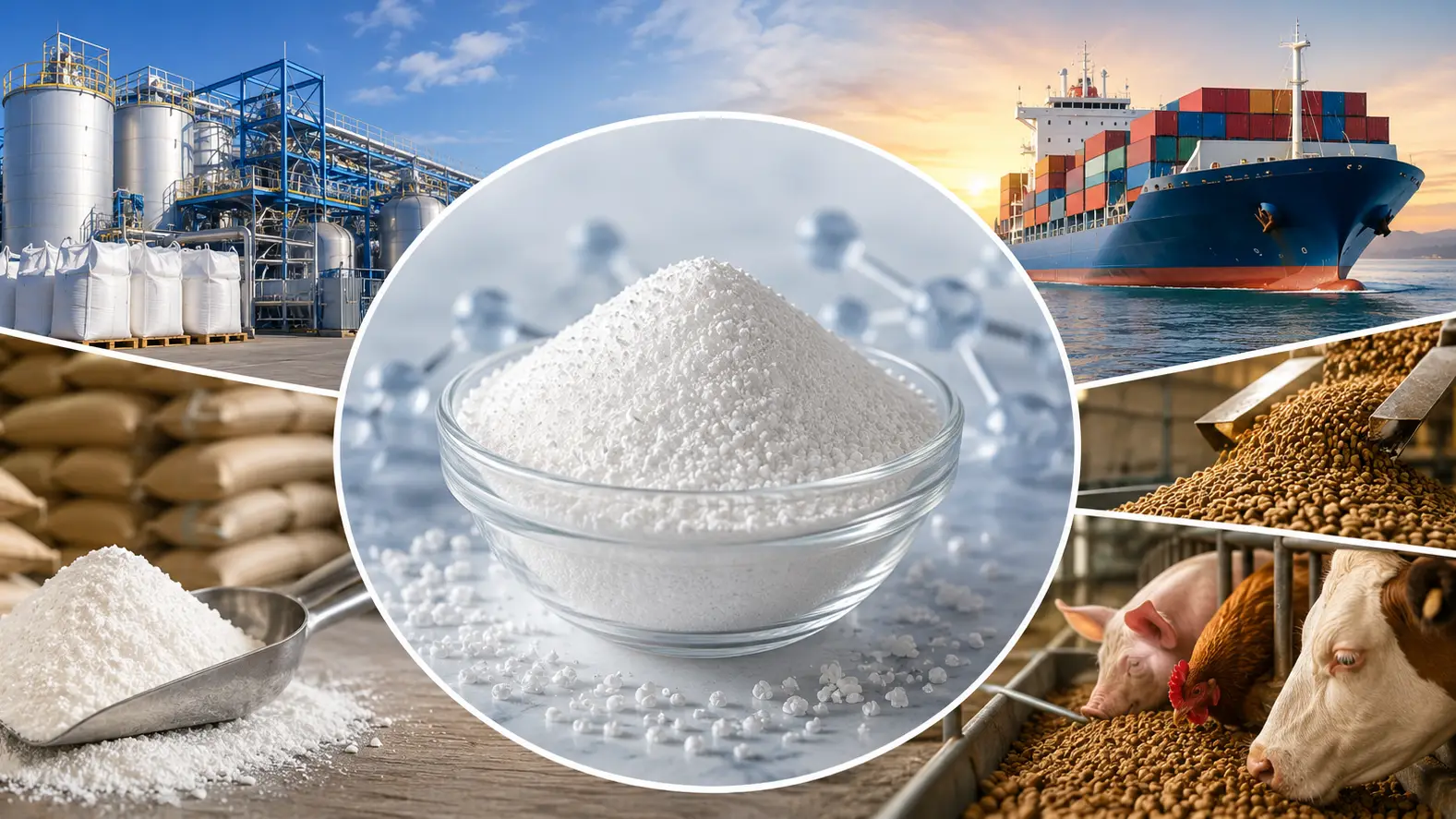
Understanding DL Methionine and Its Commercial Importance in Animal Nutrition
Industrial Applications of DL Methionine Across Feed Manufacturing Industries
Market Trends Driving Global DL Methionine Demand
Key Buyer Groups and Procurement Considerations for DL Methionine
DL Methionine Supply Chain and Global Sourcing Opportunities
Commercial Positioning of DL Methionine for B2B Marketplace Buyers
Future Outlook for DL Methionine Applications and Industry Growth
DL Methionine is a synthetic amino acid widely used as a nutritional supplement in animal feed formulations. It provides a balanced source of methionine, an essential amino acid that animals cannot produce in sufficient quantities naturally and must obtain through dietary sources. In commercial feed production, DL Methionine is valued for helping formulate efficient diets that support animal growth, productivity, and nutritional balance.
According to technical information from the National Research Council (NRC), amino acids such as methionine play an important role in animal nutrition because they contribute to protein synthesis, metabolism, and overall animal performance. The use of amino acid supplementation allows feed manufacturers to optimize formulations while maintaining nutritional efficiency.
The commercial importance of DL Methionine comes from its role as a limiting amino acid, particularly in poultry and livestock diets. Feed producers often use DL Methionine to complement plant-based protein sources, which may contain insufficient levels of naturally occurring methionine. This makes it an important ingredient for precision feed formulation.
The global expansion of livestock production has increased demand for functional feed ingredients that support efficient animal production systems. According to the Food and Agriculture Organization (FAO), improvements in livestock productivity require effective management of animal nutrition, including the availability of high-quality feed resources.
DL Methionine has become an established ingredient within industrial feed supply chains because manufacturers, distributors, and agricultural businesses require consistent nutritional inputs. Its role extends beyond basic supplementation by supporting modern feed strategies focused on efficiency, sustainability, and cost management.
For B2B buyers, understanding DL Methionine’s nutritional function is essential when evaluating suppliers, product specifications, and sourcing opportunities. Procurement teams typically assess quality consistency, supply reliability, technical documentation, and compatibility with their feed production requirements before selecting a supplier.
Poultry feed manufacturing represents one of the largest application areas for DL Methionine. Broiler chickens and laying hens require methionine to support protein formation, feather development, egg production, and overall nutritional performance. Feed manufacturers incorporate DL Methionine into poultry diets to achieve balanced amino acid profiles.
According to research published by scientific organizations such as the National Center for Biotechnology Information (NCBI), methionine supplementation has been widely studied for its influence on poultry nutrition, growth performance, and feed efficiency. This scientific foundation supports continued industrial adoption of methionine-based feed additives.
Beyond poultry, DL Methionine is also used in livestock and aquaculture feed formulations. Animal nutrition companies incorporate amino acid supplements into diets for species where optimized protein utilization is commercially important. These applications create demand among feed mills, agricultural producers, and ingredient distributors.
The increasing focus on efficient resource utilization in animal production has encouraged manufacturers to adopt targeted nutritional solutions. By improving amino acid balance, DL Methionine can help feed producers develop formulations that meet animal requirements while managing raw material costs.
Industrial buyers across agriculture and feed sectors evaluate DL Methionine based on application requirements, including purity levels, packaging formats, supply availability, and regulatory compliance. These factors influence purchasing decisions when sourcing from international suppliers.
The wide range of applications makes DL Methionine an important product category for B2B chemical and feed ingredient marketplaces. Suppliers capable of providing reliable supply solutions can support manufacturers seeking consistent access to essential feed additives.
The increasing adoption of precision nutrition practices is one of the major factors influencing DL Methionine demand. Feed manufacturers are moving toward scientifically formulated diets that optimize nutrient usage, reduce waste, and improve production efficiency. Amino acid supplementation supports these objectives by allowing more accurate feed formulation.
Industry analysis from organizations such as the International Feed Industry Federation (IFIF) highlights the importance of innovation in feed manufacturing and the continued development of efficient animal nutrition solutions. This trend supports ongoing demand for specialized feed ingredients.
Rising global consumption of animal protein has contributed to continued growth in commercial livestock and poultry production. As feed production expands, manufacturers require dependable sources of nutritional additives, including amino acids such as DL Methionine.
Market participants increasingly focus on supply chain stability as agricultural industries experience changing raw material availability, transportation challenges, and regional production differences. Reliable sourcing networks have become a key consideration for international buyers.
DL Methionine suppliers and distributors play an important role in connecting manufacturers with global feed ingredient markets. Buyers increasingly seek partners who can provide technical support, consistent quality, and dependable delivery capabilities.
For chemical marketplaces and B2B trading platforms, DL Methionine represents a commercially significant product because it connects chemical production capabilities with growing agricultural and animal nutrition industries.
DL Methionine is primarily purchased by businesses involved in animal nutrition, feed manufacturing, agricultural production, and ingredient distribution. The main buyer groups include commercial feed mills, poultry nutrition companies, livestock producers, aquaculture feed manufacturers, agricultural ingredient traders, and chemical distributors supplying regional markets.
According to industry information from the International Feed Industry Federation (IFIF), feed manufacturers rely on specialized ingredients and additives to produce nutritionally balanced animal diets at industrial scale. This creates a consistent procurement need for essential amino acids such as DL Methionine.
Feed producers typically purchase DL Methionine in bulk quantities to support continuous manufacturing operations. Large-scale buyers often require stable supply agreements, predictable delivery schedules, and documentation that supports quality assurance procedures.
For distributors and traders, DL Methionine represents a strategic product category because it serves multiple downstream industries. Suppliers that can support different packaging requirements, export markets, and customer specifications are better positioned to serve diverse B2B purchasing needs.
When sourcing DL Methionine, procurement teams evaluate several factors beyond product availability. Quality consistency, supplier reliability, technical specifications, regulatory documentation, and logistics capability are important considerations in supplier selection.
Technical information from feed ingredient organizations emphasizes the importance of maintaining ingredient quality throughout the supply chain. Feed manufacturers need confidence that purchased ingredients meet required standards and can be incorporated into established production processes.
Pricing competitiveness is another important factor, but many industrial buyers also prioritize long-term supply stability. A lower-cost option may not provide sufficient value if inconsistent deliveries or quality concerns disrupt manufacturing operations.
B2B buyers often compare multiple suppliers to identify partners capable of meeting volume requirements, supporting international shipments, and providing transparent product information. Marketplaces that connect verified suppliers with professional buyers help simplify this sourcing process.
A stable supply chain is essential for industries dependent on continuous feed production. DL Methionine buyers require dependable access to the product because interruptions in ingredient availability can affect feed manufacturing schedules and downstream agricultural operations.
Global trade in feed ingredients involves coordination between manufacturers, exporters, distributors, logistics providers, and end users. Each stage of the supply chain contributes to product availability, delivery efficiency, and overall procurement reliability.
According to data and agricultural trade information from organizations such as the Food and Agriculture Organization (FAO), global food production systems increasingly depend on efficient supply networks to support growing nutritional demand. This reinforces the importance of reliable sourcing channels for feed-related products.
For international buyers, selecting suppliers with established export capabilities can reduce procurement risks. Factors such as documentation support, shipment management, and communication efficiency influence the success of cross-border sourcing relationships.
DL Methionine provides commercial opportunities for manufacturers, distributors, and traders operating within the animal nutrition supply chain. Manufacturers can expand their market reach by supplying feed companies that require consistent amino acid solutions.
Distributors play an important role by connecting global suppliers with regional buyers who may require flexible order quantities, local inventory availability, or market-specific support. This creates opportunities for businesses involved in ingredient trading and agricultural supply networks.
The increasing demand for efficient animal production systems continues to support interest in feed additives. As livestock and poultry industries develop, companies involved in sourcing and distribution can benefit from supplying essential nutritional ingredients.
For B2B chemical marketplaces, DL Methionine listings provide buyers with access to supplier information, product details, and sourcing opportunities. A transparent marketplace environment helps procurement teams identify suitable suppliers more efficiently.
DL Methionine is commercially important because it connects chemical manufacturing capabilities with the global animal nutrition industry. Its role as an essential feed ingredient creates demand from businesses seeking reliable nutritional solutions for industrial feed production.
Unlike commodity ingredients purchased only based on volume and price, DL Methionine buyers often consider technical suitability, supply reliability, and supplier expertise. These purchasing factors create opportunities for specialized suppliers and marketplaces that provide detailed product information.
According to market analysis from recognized agricultural and feed industry organizations, efficient feed production remains a key priority as producers seek ways to improve resource utilization and maintain productivity. This supports continued relevance for amino acid-based feed additives.
For Tradeasia, Chemtradeasia, and Tradechem Marketplace, DL Methionine represents a product category where buyers benefit from structured sourcing information. Presenting application details, supplier capabilities, and industry relevance helps connect manufacturers and buyers within global markets.
Professional buyers often begin their sourcing journey by researching product applications, supplier capabilities, and market availability. A well-structured product page helps procurement teams understand whether a product matches their technical and commercial requirements.
Trade platforms support purchasing decisions by organizing essential product information in one place. Buyers can evaluate available options, compare suppliers, and identify potential partners based on business requirements.
The commercial value of DL Methionine extends across multiple industries, including feed production, livestock farming, agricultural distribution, and ingredient trading. This broad application base creates opportunities for suppliers targeting international B2B markets.
By providing accessible sourcing information and connecting buyers with suppliers, chemical marketplaces can improve transparency and efficiency within global ingredient supply chains.
The future demand for DL Methionine is closely connected to developments in animal nutrition, feed efficiency, and sustainable livestock production. As producers seek improved resource utilization, amino acid supplementation continues to play an important role in modern feed strategies.
Scientific research continues to examine how amino acids contribute to animal health, production efficiency, and nutritional optimization. These developments support continued innovation in feed formulation practices.
Growing awareness of sustainable agricultural production is also influencing ingredient selection. Feed manufacturers are increasingly interested in solutions that help optimize nutritional inputs and reduce unnecessary resource consumption.
These trends indicate that DL Methionine will remain relevant for industries focused on efficient animal production and advanced feed manufacturing technologies.
For suppliers, long-term opportunities exist through expanding international trade relationships, improved distribution networks, and increasing demand from developing agricultural markets. Companies that provide consistent quality and dependable logistics can strengthen their position in global markets.
Buyers, meanwhile, are expected to continue prioritizing supplier transparency, technical support, and supply chain resilience. These factors will influence purchasing decisions as industries become more interconnected.
The continued growth of animal feed production creates a stable commercial environment for essential feed ingredients. DL Methionine suppliers that understand customer applications and procurement challenges can better serve industrial buyers.
As a B2B marketplace product, DL Methionine offers opportunities for manufacturers, traders, distributors, and procurement teams to participate in a growing global supply chain supported by agricultural and nutritional demand.
Sources
We're committed to your privacy. Tradeasia uses the information you provide to us to contact you about our relevant content, products, and services. For more information, check out our privacy policy.


 English
 Indonesian
 简体字
简体字
 العربية
 Español
 Français
 Português
 日本語
日本語
 한국어
한국어
 Tiếng Việt



















