Explore our network of country and industry based websites to access localized information, product offerings, and business services across our group.
Log in to start sending quotation requests for any product.
Don't have an account? Sign Up Here
Home Wheat Bran Applications, Buyer Demand and B2B Sourcing Opportunities
Trade Insights | Applications and Buyers | 31 August 2026
Wheat Bran and Its Commercial Role
Wheat Bran Applications Across Animal Feed
Food and Functional Ingredient Applications
Emerging Wheat Bran Valorization Trends
Wheat Bran Buyers and Procurement Priorities
B2B Sourcing and Supplier Evaluation
Commercial Outlook for Wheat Bran
Conclusion: Turning Wheat Bran Demand into Sourcing Opportunities
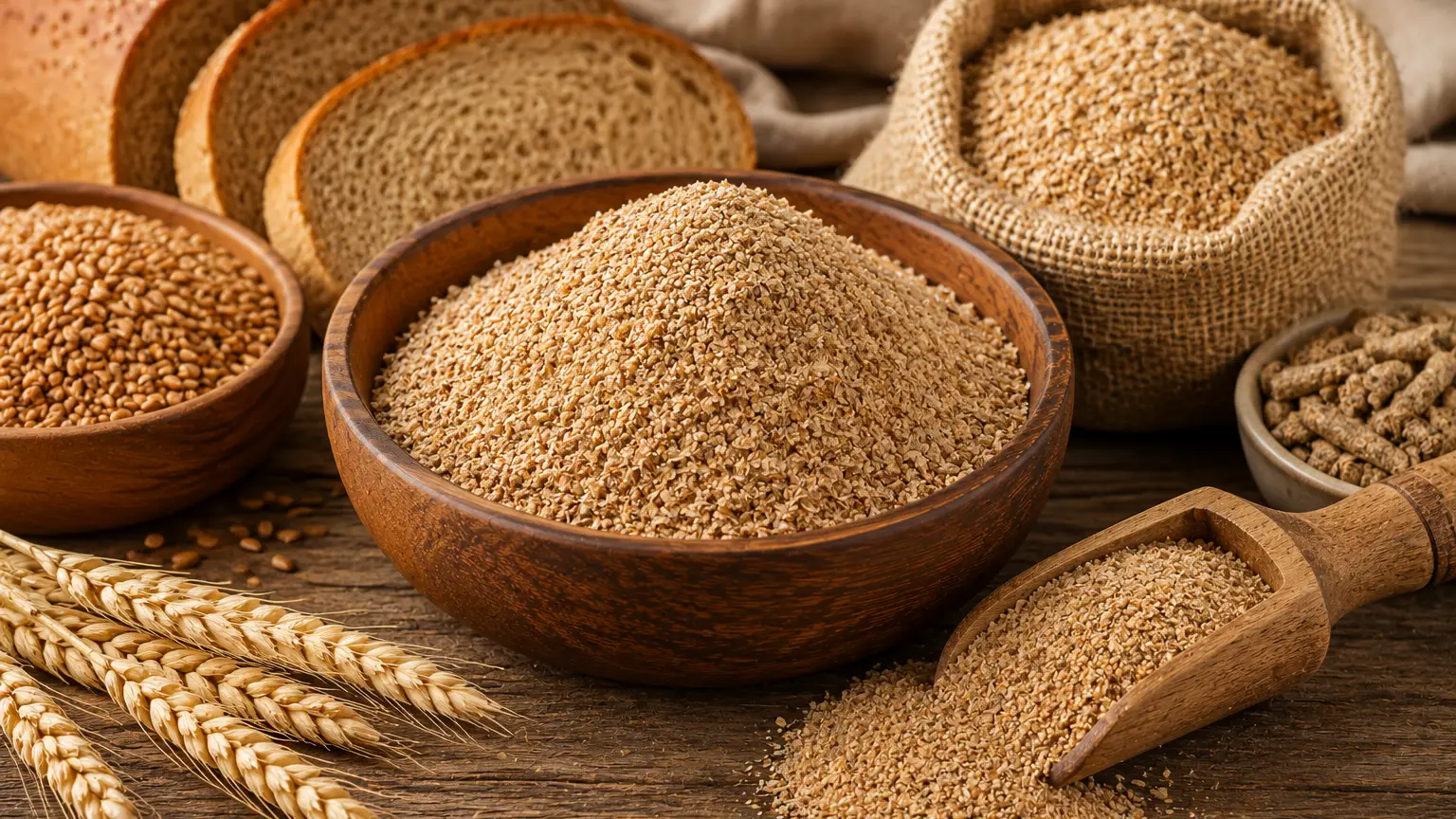
Wheat bran is the outer portion of the wheat kernel separated during commercial milling. The U.S. Department of Agriculture describes wheat bran as the coarse outer covering of the wheat kernel removed during conventional flour milling. Because milling separates the bran from the starch-rich endosperm, wheat bran becomes an important co-product with applications extending beyond the primary production of flour.
From a commercial perspective, wheat bran is valued for its combination of dietary fiber, protein, minerals, lipids and residual starch. Feedipedia identifies fiber as a defining characteristic, while its composition can vary substantially depending on milling method and the proportion of outer grain layers and endosperm retained. This variability means buyers should evaluate wheat bran according to its intended application rather than treating all grades as interchangeable.
The established market for wheat bran is strongly connected to animal nutrition, where it provides a practical route for utilizing a major milling co-product. At the same time, research is increasingly examining ways to extract or concentrate higher-value components such as arabinoxylan and other functional fractions. This creates two complementary commercial pathways: high-volume conventional applications and more specialized value-added ingredient applications.
The commercial significance of wheat bran therefore depends on how effectively processors match product characteristics with end-use requirements. A feed manufacturer may prioritize nutritional composition, consistency and cost, whereas a food ingredient developer may be more interested in fiber functionality, solubility or arabinoxylan characteristics. For B2B buyers, understanding this distinction is essential when evaluating wheat bran suppliers and defining procurement specifications.
Animal feed remains one of the most established wheat bran applications. Feedipedia classifies wheat bran among cereal grains and plant-derived by-products and notes its use for ruminants, pigs, poultry, rabbits, horses, fish and crustaceans. Its palatability, physical characteristics and fiber contribution make it a useful component in compound feed formulations, although appropriate inclusion depends on animal species and overall diet composition.
Wheat bran is commonly incorporated into pig diets, while poultry applications require greater attention to its variable nutritional value and relatively high fiber content. Feedipedia notes that wheat bran's composition can differ considerably between products sold under the same name. Consequently, feed formulators need reliable analytical information when determining inclusion levels, particularly where energy density and digestibility are important commercial considerations.
For ruminant producers, wheat bran can function as part of balanced feed programs where its fiber, protein, mineral and residual starch characteristics complement other feed materials. Its role is not simply that of a low-cost filler; formulation decisions depend on the nutritional profile of the complete ration. This makes consistency between batches particularly relevant to commercial feed mills purchasing wheat bran at recurring volumes.
Feed mills, livestock nutrition companies, animal producers and ingredient distributors represent important buyer groups for wheat bran. Their purchasing decisions commonly center on nutritional specifications, moisture, fiber, protein, contamination controls, physical form, packaging, availability and delivered cost. For these buyers, a dependable wheat bran supplier can be commercially valuable because predictable raw-material characteristics simplify formulation, production planning and inventory management. Feedipedia and USDA agricultural resources both recognize cereal milling by-products as established feed resources.
Food applications provide a different commercial pathway for wheat bran. Wheat bran is naturally associated with dietary fiber and has been investigated as an ingredient for bakery and cereal-based products. However, direct incorporation can affect dough development, rheology, loaf volume, texture and sensory characteristics. Recent research therefore emphasizes processing, fractionation and functional modification as ways to improve wheat bran's suitability for food formulations.
Dietary fiber is one of the principal reasons food manufacturers continue to examine wheat bran as an ingredient source. Research published in 2023 describes wheat bran as a significant source of dietary fiber, protein, minerals, B vitamins and bioactive compounds. For food companies developing fiber-enriched products, wheat bran can therefore represent a raw material for nutritional positioning, provided its functional behavior and regulatory requirements are compatible with the intended finished product.
Arabinoxylan is particularly relevant to higher-value wheat bran applications. A 2025 Food Chemistry review explains that arabinoxylan structure and properties can influence interactions with gluten and starch and consequently affect dough functionality. This has encouraged research into wheat bran-derived fractions with targeted characteristics rather than relying exclusively on unmodified bran. Such developments could expand opportunities for ingredient manufacturers and food technology companies.
Food ingredient manufacturers, bakery companies, cereal processors, functional food developers and ingredient distributors may evaluate wheat bran differently from feed buyers. They can require tighter controls on particle size, sensory properties, moisture, microbiological quality, contaminants, origin and processing history. Buyers investigating commercial supply can review the Wheat Bran product page for product and sourcing information relevant to industrial applications.
A major trend in wheat bran research is valorization: extracting greater commercial value from a material historically directed toward animal feed. A 2024 open-access review describes wheat bran arabinoxylan as a versatile resource with potential nutritional, food-processing and materials applications. This indicates a broader shift from treating bran solely as a commodity feed ingredient toward evaluating it as a source of functional compounds.
Recent work is examining fractionated wheat bran components for applications in functional foods, delivery systems, food packaging and other advanced materials. A 2026 Food Chemistry review specifically identifies wheat bran arabinoxylan as an area of active research, including molecular modification and practical applications in functional food systems, packaging films and delivery technologies. For B2B markets, this suggests potential growth in specialized fractions alongside conventional whole-bran demand.
The trend is not simply toward finding more applications; it is also toward controlling functionality. Researchers are studying extraction, enzymatic treatment, chemical modification and other processing methods to adjust solubility, molecular characteristics and technological performance. The commercial implication is important: future wheat bran demand may increasingly be segmented by specification and functionality instead of being determined solely by volume and commodity pricing.
Wheat bran valorization also fits broader industrial interest in improving the utilization of agricultural co-products. USDA research initiated in 2024 specifically targets functional wheat bran extracts for bakery applications, illustrating continued institutional interest in developing higher-value uses. For manufacturers and traders, these developments create opportunities to connect conventional milling streams with food, ingredient and specialty processing markets.
The buyer landscape includes compound feed manufacturers, livestock nutrition companies, bakery ingredient producers, cereal and food processors, functional food manufacturers, ingredient distributors and commodity traders. Different buyer groups purchase wheat bran for different reasons, meaning commercial suppliers must be able to communicate application suitability rather than relying on the product name alone. This segmentation is important when developing B2B wheat bran sourcing strategies.
Procurement teams typically evaluate specifications that influence production performance, including moisture, fiber, protein, starch, ash, particle size, physical form, purity and microbiological characteristics. Feedipedia's extensive composition data demonstrates why wheat bran should be assessed as a variable agricultural co-product rather than a perfectly standardized material. Buyers may also require documentation covering origin, quality controls, packaging, shelf life and applicable regulatory requirements.
Supplier comparison is particularly important for products derived from agricultural processing because composition and availability can vary by wheat type, milling process, origin and season. Buyers therefore compare not only price but also consistency, documentation, logistics capability, order flexibility and the supplier's ability to meet repeat specifications. For recurring industrial consumption, a slightly different product profile can have downstream effects on formulation, processing and production economics.
A well-structured B2B product page can reduce the initial information gap between a buyer and supplier by clearly connecting the material with applications and sourcing requirements. For buyers researching wheat bran applications, the Wheat Bran sourcing page provides a relevant starting point for evaluating supply options, while direct supplier discussions can establish application-specific specifications and commercial requirements.
The first step in wheat bran sourcing is to define the application before comparing offers. Feed manufacturers may require a specification optimized for a particular animal diet, while food processors may need a finer or more controlled material. Buyers should therefore establish the required nutritional, physical, safety and quality parameters before evaluating quotations. Application-led purchasing reduces the risk of selecting a product that appears commercially attractive but performs poorly in production.
Supplier reliability extends beyond having wheat bran available at the time of inquiry. Procurement teams should consider production or aggregation capability, quality consistency, documentation, packaging options, shipment planning and communication. For international buyers, logistics coordination and export experience can become especially important because agricultural co-products are influenced by freight costs, storage requirements and regional supply conditions.
The lowest quoted unit price does not necessarily represent the lowest total procurement cost. Buyers should consider freight, handling, storage, losses, packaging, testing and the potential cost of inconsistent material. In feed and food production, specification deviations can also create operational costs through reformulation or additional processing. A commercial sourcing decision should therefore compare delivered value rather than headline price alone.
A specialized B2B marketplace can help buyers move from application research toward supplier engagement by organizing product information around commercial use cases. For wheat bran, this is especially relevant because the same raw material can serve conventional feed markets as well as emerging food and functional ingredient pathways. Tradeasia, Chemtradeasia and Tradechem Marketplace positioning can support this discovery process by connecting product information with the needs of procurement teams, manufacturers, traders and distributors.
The near-term commercial foundation for wheat bran remains its established role in animal feeding. Feedipedia identifies it as a major agro-industrial by-product used in animal feed and notes that it is exported worldwide as a feed commodity. This established application provides a broad buyer base, particularly among feed mills and animal nutrition businesses that require recurring supplies of cereal-based ingredients.
At the same time, research activity suggests that food applications are becoming increasingly sophisticated. Rather than simply adding whole wheat bran to formulations, researchers are investigating specific fractions, pretreatments and arabinoxylan functionality. The 2025 Food Chemistry review highlights the importance of molecular characteristics and processing conditions in determining performance in cereal products, reinforcing the potential for more specialized wheat bran ingredients.
Manufacturers and traders can potentially capture additional value by segmenting wheat bran according to buyer requirements, application and specification. Conventional feed-grade demand can coexist with higher-value opportunities involving dietary fiber, functional ingredients and recovered arabinoxylan. This creates a commercial environment where sourcing networks, processing capabilities and application knowledge can be as important as commodity availability.
For buyers in Asia and international markets, wheat bran sourcing can benefit from a marketplace approach that brings together product discovery, application information and supplier communication. The opportunity is particularly relevant for procurement teams seeking alternative supply sources or distributors looking to expand their ingredient portfolio. Reliable specifications, transparent commercial information and responsive supplier engagement remain central to converting market interest into repeat purchasing.
Wheat bran has a strong established position in animal feed, but its commercial relevance increasingly extends into food, dietary fiber and functional ingredient development. Its composition provides a platform for multiple applications, while research into arabinoxylan and other components is expanding the range of potential value-added uses. This combination makes wheat bran more than a conventional milling by-product for B2B buyers evaluating long-term sourcing opportunities.
For buyers, the most effective sourcing approach is to start with the end use and work backward toward the required specification. Feed manufacturers, food processors, ingredient companies and distributors can have materially different quality priorities. Defining these requirements before requesting quotations helps buyers compare suppliers on relevant commercial and technical criteria rather than focusing only on price.
The convergence of established feed demand and emerging value-added applications creates an opportunity for a specialized marketplace to serve different stages of the buying journey. Tradeasia / Chemtradeasia / Tradechem Marketplace can position wheat bran as a commercially relevant raw material for manufacturers, procurement teams, distributors and traders seeking supply information and application-oriented sourcing options.
Businesses evaluating wheat bran for animal feed, food processing or functional ingredient applications can begin by reviewing the Wheat Bran supplier information and then aligning product requirements with their intended use, target specifications and logistics needs. In a market where agricultural co-products can vary by origin and processing, reliable sourcing begins with clear specifications and an application-focused supplier evaluation process.
We're committed to your privacy. Tradeasia uses the information you provide to us to contact you about our relevant content, products, and services. For more information, check out our privacy policy.


 English
 Indonesian
 简体字
简体字
 العربية
 Español
 Français
 Português
 日本語
日本語
 한국어
한국어
 Tiếng Việt



















