Explore our network of country and industry based websites to access localized information, product offerings, and business services across our group.
Log in to start sending quotation requests for any product.
Don't have an account? Sign Up Here
Home How Guar Meal Supports Sustainable Livestock Feed Production Worldwide
Trade Insights | Applications and Buyers | 27 July 2026

Introduction to Guar Meal
Production Process and Product Characteristics
Industrial Applications of Guar Meal
Key Buyers and Target Industries
Global Market Trends
Factors to Consider When Sourcing Guar Meal
Why B2B Marketplaces Simplify Procurement
Conclusion
Sources
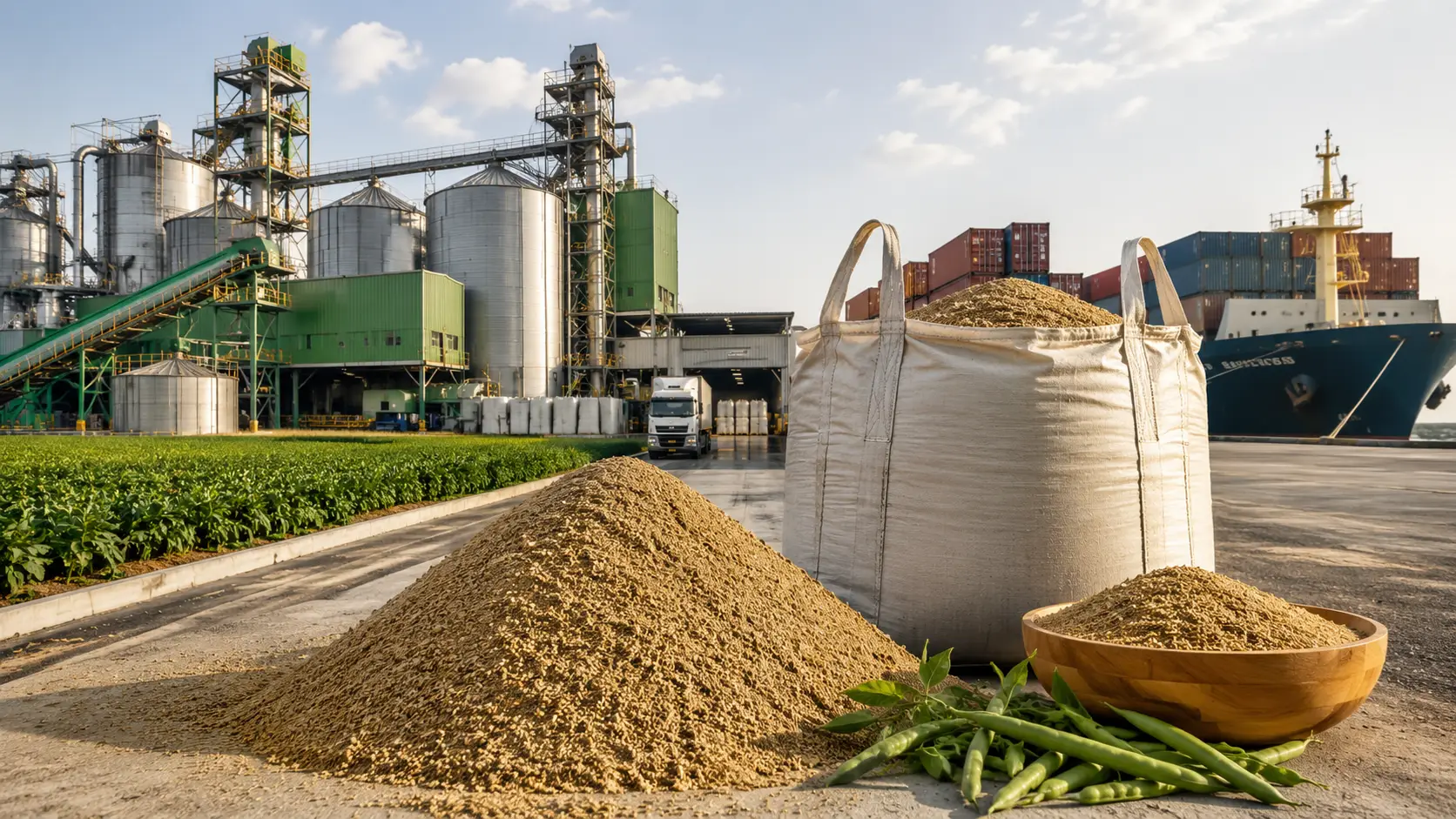
Guar meal is a protein-rich by-product obtained during the processing of guar seeds for guar gum production. While guar gum is extracted from the endosperm, the remaining germ and husk are processed into guar meal, creating an economically valuable ingredient for the livestock feed industry.
Its high protein content makes guar meal an attractive alternative to conventional plant protein sources in formulated feed. Feed manufacturers increasingly incorporate it into balanced nutrition programs to support livestock growth while optimizing production costs.
The growing demand for sustainable feed ingredients has encouraged producers to evaluate alternative protein sources. Guar meal fits this requirement by utilizing agricultural by-products that might otherwise have limited commercial value.
As livestock production expands worldwide, procurement teams seek dependable ingredients capable of maintaining nutritional consistency, supply stability, and competitive pricing. Guar meal has become one of the recognized options in this evolving market.
The production of guar meal begins after guar gum extraction. The husk and germ portions undergo heat treatment, grinding, and quality control before being supplied to feed manufacturers in meal or pellet form.
Modern processing technologies help reduce naturally occurring anti-nutritional factors while improving digestibility. Manufacturers continue refining production methods to increase nutritional performance and product consistency for commercial feed applications.
Guar meal typically contains a relatively high concentration of crude protein, making it suitable for supplementing livestock diets. Depending on processing methods, nutritional composition may vary among suppliers.
Besides protein, guar meal also contributes valuable amino acids and dietary fiber. Feed formulators often evaluate these characteristics alongside digestibility, moisture levels, and product quality specifications before incorporating guar meal into commercial formulations.
The largest commercial application of guar meal is animal feed production. It is commonly utilized in feed formulations for cattle, poultry, sheep, goats, and aquaculture, depending on nutritional requirements and processing quality.
Feed manufacturers carefully determine inclusion rates to balance nutritional performance with overall feed efficiency. When properly formulated, guar meal serves as a cost-effective protein source that complements other feed ingredients.
The utilization of guar meal contributes to improved resource efficiency by maximizing the value obtained from guar seed processing. This aligns with growing sustainability initiatives across agricultural supply chains.
As feed producers continue searching for environmentally responsible ingredients, guar meal supports circular economy principles by transforming processing residues into commercially valuable nutritional products.
Guar meal serves a diverse customer base across the global agricultural sector. Commercial feed mills represent one of the largest purchasing groups due to their continuous demand for protein-rich raw materials.
Livestock integrators, dairy operations, poultry producers, aquaculture businesses, feed distributors, agricultural cooperatives, and international commodity traders also purchase guar meal based on regional production requirements and seasonal demand.
Industrial buyers typically evaluate several factors before selecting guar meal suppliers. Product consistency, nutritional specifications, production capacity, logistics capabilities, and regulatory compliance all influence procurement decisions.
Reliable suppliers that maintain transparent quality documentation, stable export capabilities, and responsive customer support often establish stronger long-term relationships with procurement teams seeking dependable feed ingredient partners.
The global animal feed industry continues to diversify its raw material portfolio as producers seek reliable alternatives to traditional protein ingredients. Fluctuations in the availability and pricing of soybean meal and other feed proteins have encouraged greater interest in guar meal among commercial feed manufacturers.
Livestock expansion in Asia, the Middle East, Africa, and Latin America has further supported demand for economical feed ingredients that can contribute to balanced nutritional programs. As animal protein consumption increases, procurement teams are broadening their sourcing strategies to include products such as guar meal.
India remains the world's leading producer and exporter of guar products due to its favorable climate and extensive cultivation of guar crops. International buyers frequently source guar meal from established exporters capable of maintaining consistent product quality and reliable shipping schedules.
Global trade is influenced by agricultural production, seasonal harvests, logistics conditions, currency movements, and changing feed industry requirements. Buyers often monitor these factors to optimize purchasing decisions and secure stable long-term supply agreements.
Selecting the right guar meal supplier involves more than comparing prices. Procurement professionals typically assess protein content, moisture levels, processing methods, packaging options, production capacity, and compliance with applicable quality standards before making purchasing decisions.
Reliable suppliers also provide technical documentation, certificates of analysis, export documentation, and responsive customer support. These factors help reduce procurement risks while improving confidence in long-term commercial partnerships.
Efficient international sourcing depends on strong logistics management and transparent communication throughout the purchasing process. Buyers benefit from suppliers that offer flexible shipment volumes, timely deliveries, and comprehensive export documentation.
Long-term supply continuity has become increasingly important as manufacturers strive to minimize operational disruptions. Working with experienced exporters helps organizations maintain consistent production schedules while managing inventory more effectively.
Digital B2B marketplaces have transformed the way industrial buyers source feed ingredients. Instead of relying solely on traditional trading channels, procurement teams can compare suppliers, request quotations, and evaluate product specifications through centralized sourcing platforms.
This streamlined approach improves market visibility while reducing the time required to identify qualified suppliers. Buyers can also expand their sourcing networks across multiple countries, creating greater flexibility in procurement planning.
B2B marketplaces provide access to product information, supplier profiles, and market insights that support informed purchasing decisions. By simplifying supplier discovery and communication, these platforms contribute to greater efficiency throughout the procurement process.
For companies involved in international trade, marketplaces such as Tradeasia, Chemtradeasia, and Tradechem Marketplace help facilitate connections between buyers and suppliers while supporting transparent and scalable sourcing activities across global markets.
Guar meal has established itself as an important protein-rich feed ingredient that supports modern livestock nutrition while maximizing the value of guar seed processing. Its commercial relevance continues to grow as feed manufacturers seek cost-effective and sustainable raw materials.
The combination of nutritional value, expanding international trade, and increasing demand for diversified feed ingredients positions guar meal as an attractive option for feed producers worldwide.
Successful procurement extends beyond purchasing a product at a competitive price. Buyers increasingly prioritize supplier reliability, product consistency, quality assurance, and dependable logistics when selecting long-term business partners.
As global supply chains become more interconnected, sourcing through established B2B marketplaces can improve efficiency, strengthen supplier relationships, and support sustainable business growth for manufacturers, distributors, and procurement professionals operating in the international feed industry.
We're committed to your privacy. Tradeasia uses the information you provide to us to contact you about our relevant content, products, and services. For more information, check out our privacy policy.


 English
 Indonesian
 简体字
简体字
 العربية
 Español
 Français
 Português
 日本語
日本語
 한국어
한국어
 Tiếng Việt