Explore our network of country and industry based websites to access localized information, product offerings, and business services across our group.
Log in to start sending quotation requests for any product.
Don't have an account? Sign Up Here
Home Linseed Meal for Animal Feed and Farming: Market Opportunities for B2B Buyers
Trade Insights | Applications and Buyers | 27 July 2026

Understanding Linseed Meal and Its Role in Agriculture
Key Applications of Linseed Meal Across Industries
Why Animal Feed Producers Choose Linseed Meal
Agricultural and Sustainable Farming Uses of Linseed Meal
Market Demand and Buyer Opportunities for Linseed Meal
Sourcing Linseed Meal Through Global B2B Supply Chains
Quality Considerations for Linseed Meal Procurement
Future Outlook of Linseed Meal in Industrial Markets
Sources
Linseed meal is an agricultural by-product obtained after processing flaxseed to extract oil. It contains valuable nutritional components, including plant-based proteins, fiber, and naturally occurring compounds that make it useful across multiple agricultural applications. As demand increases for sustainable raw materials, linseed meal has become an important ingredient for industries seeking functional plant-based resources.
For global buyers, linseed meal represents a versatile commodity with applications beyond traditional agriculture. Feed manufacturers, farming suppliers, and distributors increasingly evaluate linseed meal as part of their sourcing strategies due to its compatibility with sustainable production systems.
The commercial value of linseed meal is influenced by processing quality, availability of flaxseed resources, and the requirements of end-use industries. Reliable sourcing channels help businesses maintain consistent supply while meeting operational needs.
The growing focus on resource efficiency has increased interest in agricultural co-products such as linseed meal. Instead of treating processing residues as waste, industries can integrate these materials into productive applications that support circular agricultural practices.
For procurement teams, linseed meal provides an opportunity to source a renewable agricultural ingredient while supporting industries focused on sustainability and responsible resource management.
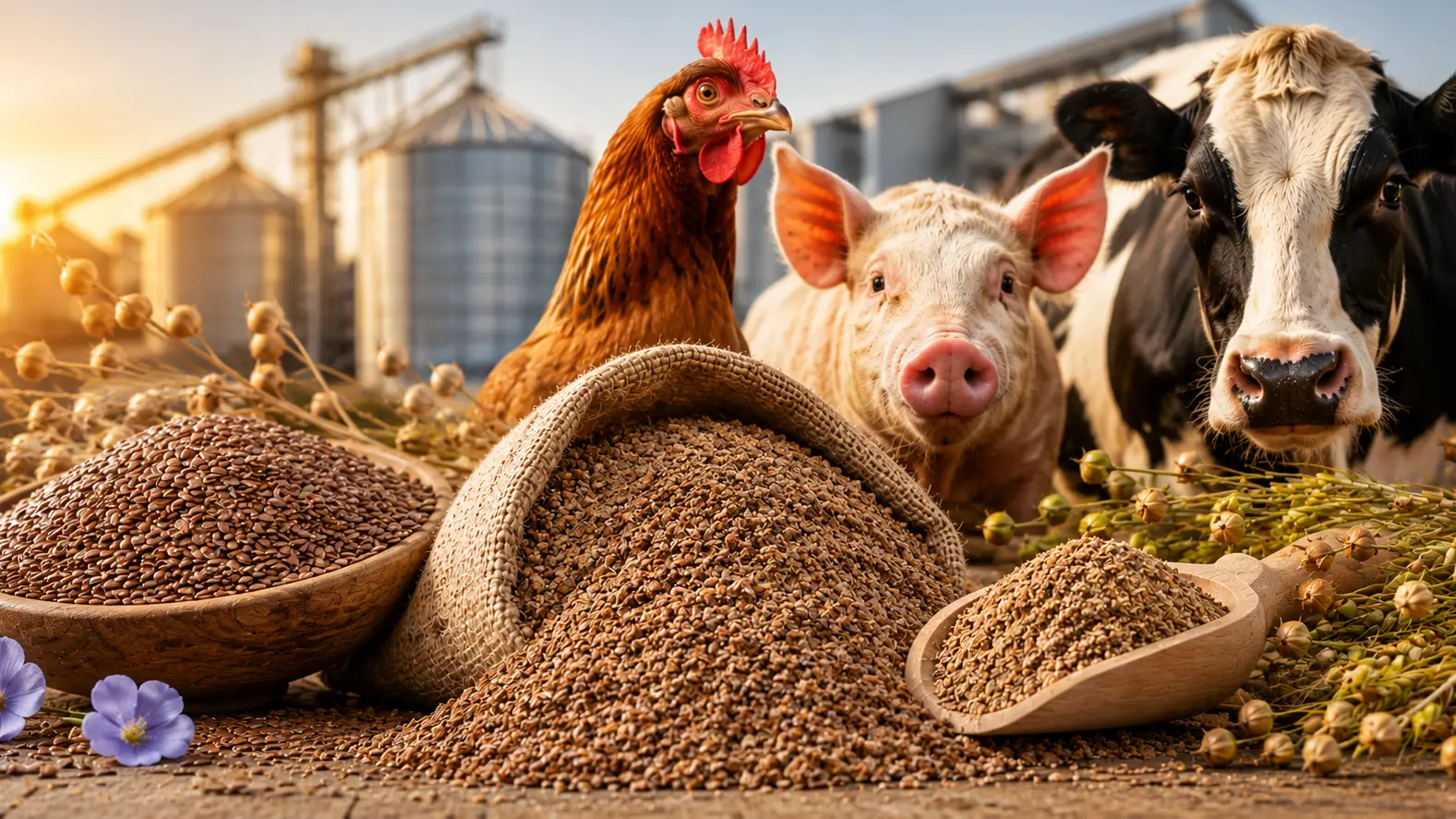
One of the primary applications of linseed meal is in animal feed manufacturing. Its nutritional profile makes it suitable as an ingredient in feed formulations where plant-based protein sources and fiber content are valued.
Feed producers evaluate linseed meal based on nutritional consistency, processing standards, and compatibility with different livestock feed requirements. It can serve as an ingredient for manufacturers developing balanced feed products for agricultural markets.
Linseed meal is also used in agricultural practices as an organic input. Farmers and agricultural suppliers consider it a natural material that can contribute organic matter to soil management programs.
The use of plant-derived materials in farming continues to gain attention as producers seek alternatives that support sustainable cultivation methods. This creates additional demand from agricultural input suppliers and organic farming businesses.
Animal feed manufacturers often look for ingredients that provide functional nutritional benefits while maintaining supply reliability. Linseed meal offers plant-based nutritional components that can complement other feed ingredients.
Procurement decisions typically depend on factors such as composition, availability, supplier reliability, and compatibility with existing production processes.
The animal nutrition industry continues to explore diverse ingredient sources as livestock producers seek efficient and sustainable feed solutions. Plant-based materials like linseed meal support this transition by providing additional options for feed formulation.
For international buyers, access to dependable suppliers and transparent sourcing networks is essential to maintaining production continuity.
Organic farming markets increasingly seek agricultural inputs derived from natural sources. Linseed meal fits into this trend as businesses explore renewable materials for farming applications.
Agricultural distributors supplying organic growers may consider linseed meal as part of their product portfolio for customers seeking sustainable cultivation solutions.
The utilization of linseed meal demonstrates how agricultural processing streams can create additional commercial value. By converting plant-based processing outputs into useful products, industries can improve resource efficiency.
This approach aligns with broader sustainability goals across agriculture, food production, and raw material trading sectors.
The main buyers of linseed meal include animal feed manufacturers, agricultural distributors, organic farming suppliers, and companies involved in agricultural commodity trading.
These buyers typically require consistent product availability, dependable logistics, and suppliers capable of supporting bulk commercial requirements.
Demand for linseed meal is supported by increasing interest in sustainable agriculture, alternative feed ingredients, and renewable agricultural resources. Companies operating across international markets continue to search for reliable sourcing options.
B2B marketplaces provide opportunities for connecting suppliers with buyers seeking efficient procurement channels and broader supply networks.
Selecting the right linseed meal supplier is a critical step for businesses managing agricultural supply chains. Buyers often evaluate supplier experience, product consistency, documentation, and export capabilities.
A reliable supplier relationship helps companies reduce sourcing risks and maintain stable operations across different markets.
Digital marketplaces have transformed how industrial buyers discover and evaluate suppliers. Platforms such as Tradeasia, Chemtradeasia, and Tradechem Marketplace support international trade by connecting businesses with sourcing opportunities.
For procurement professionals, these platforms can simplify supplier discovery, product comparison, and communication between global buyers and sellers.
Quality assessment is an important part of commercial linseed meal purchasing. Buyers generally consider factors such as nutritional profile, processing conditions, packaging, and supply consistency.
Clear specifications help manufacturers ensure that purchased materials meet their production requirements.
Efficient logistics planning is essential for agricultural commodities traded internationally. Buyers must consider shipment schedules, storage requirements, and supplier reliability.
Working with experienced suppliers can help businesses develop smoother procurement processes and maintain dependable material availability.
The shift toward sustainable agricultural practices is expected to continue influencing demand for renewable plant-based materials. Linseed meal may benefit from increased adoption in industries seeking environmentally responsible inputs.
Businesses that understand emerging market requirements can identify opportunities within growing agricultural supply chains.
As industries continue expanding international sourcing networks, linseed meal remains a relevant commodity for agricultural and industrial applications. Buyers looking for dependable supply channels can benefit from partnerships with experienced marketplace participants.
Through efficient sourcing strategies and strong supplier relationships, companies can integrate linseed meal into their long-term procurement plans.
Food and Agriculture Organization of the United Nations
We're committed to your privacy. Tradeasia uses the information you provide to us to contact you about our relevant content, products, and services. For more information, check out our privacy policy.


 English
 Indonesian
 简体字
简体字
 العربية
 Español
 Français
 Português
 日本語
日本語
 한국어
한국어
 Tiếng Việt