Explore our network of country and industry based websites to access localized information, product offerings, and business services across our group.
Log in to start sending quotation requests for any product.
Don't have an account? Sign Up Here
Home Pellet Binder Solutions for Livestock Feed Production and Global Buyers
Trade Insights | Applications and Buyers | 20 July 2026

Introduction to Pellet Binder in Modern Feed Manufacturing
Role of Pellet Binder in Improving Feed Production Efficiency
Key Applications of Pellet Binder Across Animal Nutrition Industries
Major Buyers and Market Demand Drivers for Pellet Binder
Global Sourcing Trends and Supply Chain Considerations for Pellet Binder
Quality Factors Influencing Pellet Binder Selection
Future Market Outlook and Strategic Opportunities for Pellet Binder Buyers
Conclusion: Building Reliable Pellet Binder Supply Partnerships
Sources
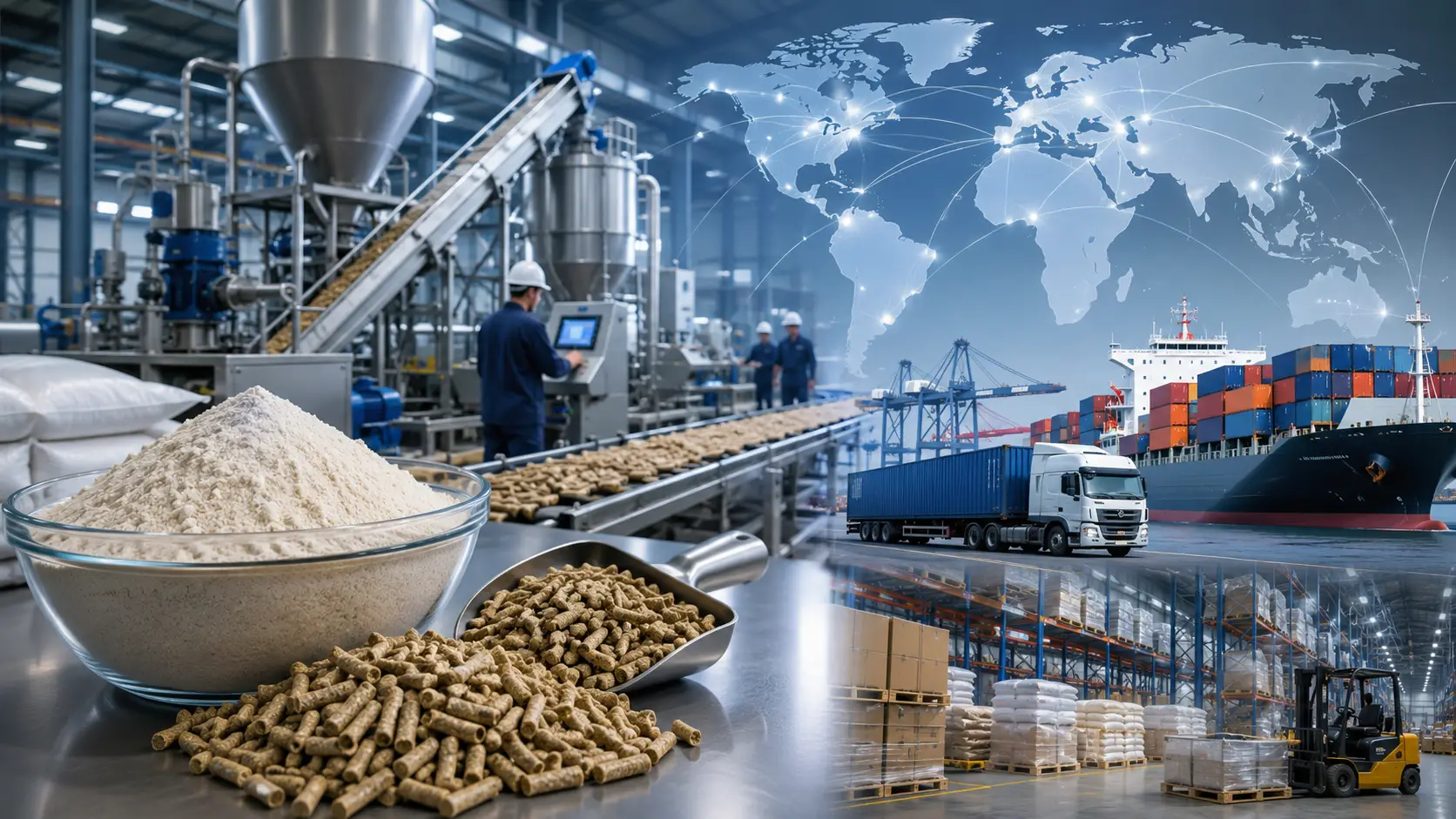
Pellet binder plays an important role in modern animal feed manufacturing by improving the physical quality and stability of formulated feed products. As feed producers increasingly focus on reducing waste and improving production efficiency, pellet binders have become a valuable solution for maintaining pellet strength during processing, storage, and transportation. These functional additives support manufacturers in producing consistent feed products that meet the operational requirements of livestock and aquaculture industries.
The global animal feed sector continues to expand due to rising demand for high-quality protein production, increasing livestock farming activities, and growing investments in efficient feed processing technologies. Within this environment, pellet binder demand is closely connected with the need for improved pellet durability, reduced feed losses, and optimized manufacturing performance across commercial feed operations.
Feed mills depend on pellet quality to ensure efficient manufacturing and better product handling. Poor pellet durability can result in excessive fines, increased transportation losses, and inconsistent feed consumption patterns. Pellet binders help manufacturers improve cohesion between feed ingredients, allowing pellets to maintain their structure throughout distribution and farm application.
For large-scale feed producers, selecting the appropriate pellet binder involves evaluating formulation requirements, processing conditions, and target animal species. Buyers increasingly consider pellet binder solutions as part of their overall feed quality management strategy rather than simply an additional production ingredient.
One of the primary applications of pellet binder is improving pellet durability during feed production. Stronger pellets are less likely to break during handling, packaging, and transportation, helping feed manufacturers reduce material losses and improve operational efficiency. This benefit is particularly important for international feed supply chains where products may travel long distances before reaching end users.
Pellet durability also influences production economics by reducing the amount of unusable feed particles generated during manufacturing. For commercial feed mills producing thousands of tons annually, even small improvements in pellet stability can contribute to significant reductions in waste and improved profitability.
Pellet binders contribute to smoother feed processing by improving ingredient cohesion during pellet formation. They support manufacturing consistency by helping different feed components remain integrated under mechanical pressure and heat conditions commonly used in pellet production.
Feed manufacturers evaluate pellet binder performance based on compatibility with existing formulations, production equipment, and targeted feed specifications. As the industry moves toward more advanced feed technologies, demand is increasing for reliable binder solutions that support efficient and scalable production processes.
Livestock feed manufacturers represent one of the largest application segments for pellet binders due to the importance of producing durable and nutritionally consistent feed products. Poultry, cattle, swine, and other livestock operations require feed pellets that can withstand handling while maintaining ingredient distribution and nutritional value. Pellet binders help improve physical feed characteristics, making them an important component in commercial compound feed production.
Large-scale livestock producers increasingly rely on feed manufacturers that can provide consistent pellet quality throughout the year. As production volumes increase, buyers seek pellet binder solutions that support efficient processing, minimize feed losses, and maintain stable output quality. This creates continuous demand from industrial feed mills and animal nutrition companies.
Aquaculture feed production has become another important application area for pellet binders because aquatic environments require feed products with strong water stability and controlled physical performance. Fish and shrimp feed manufacturers often prioritize pellet integrity to reduce nutrient loss and improve feed utilization efficiency.
The expansion of aquaculture production worldwide is creating additional opportunities for pellet binder suppliers. Buyers in this sector evaluate binder performance based on factors such as pellet strength, processing compatibility, and suitability for different aquatic feed formulations.
Commercial feed mills are among the key buyers of pellet binder products because they require consistent supply for continuous manufacturing operations. These companies typically purchase through long-term supplier relationships to ensure stable production schedules and predictable product quality.
Animal nutrition companies also evaluate pellet binders as part of broader feed formulation strategies. Their purchasing decisions are influenced by technical specifications, supply reliability, regulatory compliance, and supplier capability to support large-volume industrial requirements.
Growing global meat consumption, expansion of livestock farming, and increasing adoption of processed feed systems are major factors supporting pellet binder demand. According to industry estimates, the global compound feed market continues to grow steadily, creating additional requirements for functional additives that improve production efficiency.
Feed producers are also focusing on cost optimization due to fluctuations in raw material prices. Pellet binders provide value by helping manufacturers reduce physical losses and improve feed processing performance, making them increasingly relevant in competitive feed markets.
Reliable sourcing has become a critical consideration for feed manufacturers operating in international markets. Buyers require suppliers that can provide consistent availability, stable quality standards, and efficient logistics support to avoid production interruptions.
Global pellet binder supply chains involve manufacturers, distributors, traders, and industrial buyers across multiple regions. Strong supplier networks help companies manage procurement risks while ensuring continuous access to feed additive materials required for daily operations.
International buyers typically evaluate pellet binder suppliers based on production capacity, export experience, documentation support, and delivery reliability. Feed companies increasingly prefer sourcing partners that understand regional requirements and can provide solutions aligned with industrial feed manufacturing needs.
For distributors and marketplace buyers, pellet binder represents an opportunity to serve growing animal nutrition markets by connecting manufacturers with reliable global supply channels. Effective procurement strategies help companies achieve competitive pricing while maintaining product consistency.
The performance of pellet binder is a major factor influencing purchasing decisions among feed manufacturers. Buyers assess characteristics such as binding efficiency, compatibility with feed formulations, processing stability, and overall contribution to pellet durability.
Technical evaluation is particularly important for industrial feed producers because inconsistent binder performance can affect production efficiency and final product quality. Suppliers that provide clear specifications and reliable technical support are better positioned to meet professional procurement expectations.
Feed additive buyers increasingly prioritize suppliers that maintain proper quality management systems and comply with applicable industry requirements. Documentation, traceability, and consistent manufacturing practices are essential factors in international trade.
As regulations surrounding animal nutrition products continue to evolve, buyers seek suppliers capable of supporting transparent supply chains. This trend encourages stronger cooperation between manufacturers, distributors, and global sourcing platforms.
The future demand outlook for pellet binders is closely connected to continued growth in livestock production, aquaculture expansion, and modernization of feed manufacturing facilities. Developing regions with increasing animal protein consumption are expected to create new opportunities for feed additive suppliers.
As feed producers invest in automation and efficiency improvements, functional additives such as pellet binders will remain important tools for improving production performance. Buyers are expected to focus more on solutions that provide measurable operational benefits rather than only basic ingredient supply.
Companies involved in feed manufacturing and distribution can gain competitive advantages by developing reliable pellet binder sourcing strategies. Working with experienced international suppliers enables buyers to improve supply security, manage costs, and access broader product options.
Trade platforms and global chemical marketplaces provide opportunities for connecting qualified suppliers with industrial buyers seeking efficient procurement channels. A strong sourcing partnership can support long-term business growth across animal nutrition markets.
Pellet binder continues to play an important role in improving feed manufacturing efficiency, enhancing pellet durability, and supporting consistent product quality. From livestock feed mills to aquaculture producers, buyers across the animal nutrition industry rely on effective binder solutions to optimize production processes.
As global feed markets become increasingly competitive, procurement teams are paying greater attention to supplier reliability, technical performance, and supply chain transparency. Pellet binder suppliers that understand industrial requirements can create stronger value for manufacturers and distributors worldwide.
The growing demand for efficient feed production solutions highlights the importance of dependable sourcing networks. Companies seeking stable pellet binder supply can benefit from working with experienced international partners capable of supporting quality requirements, logistics coordination, and global market access.
Tradeasia International provides a global sourcing platform connecting industrial buyers with reliable chemical and feed additive supply solutions. Through established trade networks and market expertise, Tradeasia supports businesses looking for efficient procurement strategies in the expanding animal nutrition industry.
We're committed to your privacy. Tradeasia uses the information you provide to us to contact you about our relevant content, products, and services. For more information, check out our privacy policy.


 English
 Indonesian
 简体字
简体字
 العربية
 Español
 Français
 Português
 日本語
日本語
 한국어
한국어
 Tiếng Việt