Explore our network of country and industry based websites to access localized information, product offerings, and business services across our group.
Log in to start sending quotation requests for any product.
Don't have an account? Sign Up Here
Home Global Cottonseed Meal Supply Chain Insights and B2B Sourcing Guide
Trade Insights | Supply Chain | 26 June 2026
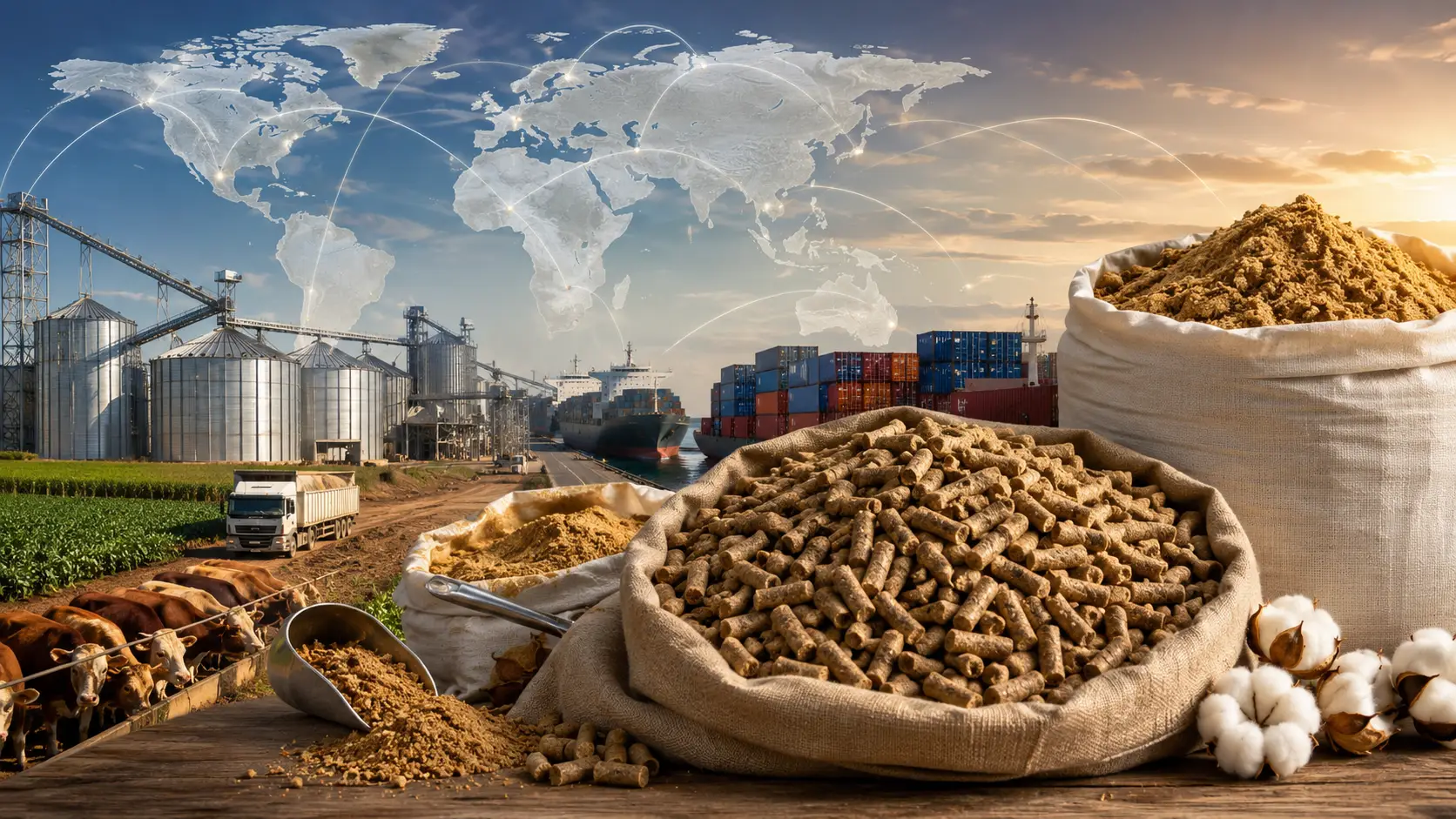
Understanding Cottonseed Meal in Global Trade
Industrial Applications Driving Demand
Global Cottonseed Meal Supply Chain Structure
Market Trends and Regional Outlook
Buyer Intent and Procurement Considerations
Strategic Sourcing Opportunities for B2B Buyers
Conclusion
Sources
Cottonseed meal is a high-protein byproduct generated during the processing of cottonseed for oil extraction. After oil is removed from the seed, the remaining meal is widely used as a protein-rich ingredient for livestock feed formulations.
As agricultural processors increasingly seek value recovery opportunities from crop outputs, cottonseed meal has become an important commodity within global feed supply chains. Its nutritional characteristics make it relevant for cattle, dairy, and selected livestock applications.
Cottonseed meal generally contains substantial protein content together with fiber and residual energy components that support feed manufacturing processes. Protein concentration varies depending on processing methods and whether dehulling occurs before extraction.
According to technical information from the United States Department of Agriculture (USDA), oilseed processing byproducts continue to play a major role in animal feed systems because of their nutritional and economic value.
Cottonseed meal demand is closely linked to the livestock and feed manufacturing industries. Feed formulators use it as a supplementary protein source to improve nutritional profiles within balanced diets.
Global growth in meat consumption and dairy production has contributed to increasing attention toward alternative protein ingredients that can complement soybean meal and other feed components.
Ruminant feeding remains one of the most significant applications for cottonseed meal. Dairy cattle and beef operations frequently use protein-rich ingredients to support production performance.
According to technical publications from the Food and Agriculture Organization (FAO), feed ingredient diversification has become increasingly important as producers seek cost optimization and nutritional consistency.
Feed manufacturers also evaluate inclusion rates based on nutrient content and species requirements.
The cottonseed meal supply chain begins with cotton cultivation and harvesting activities before moving into cotton ginning and oil extraction operations.
Regional agricultural production patterns strongly influence product availability and trade volumes across international markets.
Major cotton-producing countries contribute significantly to cottonseed availability. Processing facilities transform raw cottonseed into oil and meal products before distribution through trading networks.
Market analysis published by agricultural trade organizations indicates that supply chain efficiency increasingly depends on logistics infrastructure and export capabilities.
International traders, distributors, and procurement teams often monitor crop output, weather conditions, and transportation costs because these factors affect product availability.
Recent market developments indicate continued interest in agricultural byproducts that support sustainable feed production and resource utilization.
Increasing pressure on feed manufacturers to manage ingredient costs has expanded consideration of protein alternatives within feed formulations.
Countries with large cotton production bases continue to influence international supply availability. Production trends in Asia, North America, and selected emerging agricultural markets frequently affect pricing conditions.
According to market analysis from industry research organizations, changing feed economics and livestock demand patterns continue influencing cottonseed meal trade flows.
Procurement teams increasingly evaluate regional sourcing strategies to reduce supply risks and improve purchasing stability.
Cottonseed meal purchasing activity is primarily driven by feed producers, livestock operations, agricultural processors, and commodity traders.
Commercial buyers frequently compare nutritional performance, processing quality, and sourcing consistency before entering procurement agreements.
Procurement teams generally evaluate protein content, moisture levels, fiber characteristics, origin documentation, and quality assurance systems during sourcing activities.
Buyers compare suppliers because pricing structures, shipment reliability, and available volumes may vary across regions and processing facilities.
Product pages on B2B marketplaces support sourcing decisions by simplifying supplier identification and enabling easier comparison between product specifications and commercial requirements.
As supply chains become increasingly interconnected, sourcing strategies continue evolving beyond traditional price considerations.
Procurement teams increasingly seek suppliers capable of providing consistent availability together with transparent supply information.
Digital B2B platforms allow buyers to identify suppliers, distributors, and manufacturers across multiple regions while reducing search complexity.
According to agricultural trade observations from global commodity sectors, online sourcing ecosystems continue supporting procurement efficiency and supplier visibility.
Companies that integrate market intelligence with sourcing strategies are often better positioned to manage fluctuations in supply and demand conditions.
Cottonseed meal continues to hold strategic importance within animal nutrition and feed manufacturing markets due to its protein value and agricultural byproduct utilization advantages.
As global procurement teams increasingly prioritize supply chain resilience, understanding market conditions and sourcing factors becomes essential for effective purchasing decisions.
B2B marketplaces provide an increasingly important environment where buyers, suppliers, and distributors can improve sourcing transparency and support informed procurement activity.
We're committed to your privacy. Tradeasia uses the information you provide to us to contact you about our relevant content, products, and services. For more information, check out our privacy policy.


 English
 Indonesian
 简体字
简体字
 العربية
 Español
 Français
 Português
 日本語
日本語
 한국어
한국어
 Tiếng Việt



















