Explore our network of country and industry based websites to access localized information, product offerings, and business services across our group.
Log in to start sending quotation requests for any product.
Don't have an account? Sign Up Here
Home Global Linseed Meal Supply Chain Trends and Sourcing Opportunities
Trade Insights | Supply Chain | 27 July 2026

Understanding the Role of Linseed Meal in Global Supply Chains
Linseed Meal Production and Supply Chain Dynamics
Industrial Applications and Market Demand for Linseed Meal
Key Factors Influencing Linseed Meal Procurement Decisions
Global Market Outlook and Commercial Opportunities for Linseed Meal
How Buyers Can Source Reliable Linseed Meal Suppliers
Future Trends in Linseed Meal Supply and B2B Trade
Sources
Linseed meal is a plant-based ingredient produced after extracting oil from flaxseed. As a protein-rich and nutrient-containing material, it has become an important commodity for industries seeking functional agricultural inputs and sustainable raw materials. Its availability depends strongly on flax cultivation, processing infrastructure, and international agricultural trade networks.
For global buyers, linseed meal represents more than an agricultural by-product. It is a strategic input used by companies that require consistent nutritional properties, dependable supply volumes, and competitive sourcing options. The increasing interest in plant-derived ingredients has strengthened its commercial importance across multiple markets.
The supply chain of linseed meal connects farmers, oilseed processors, distributors, exporters, and industrial users. Each stage influences product quality, pricing stability, and delivery reliability. Understanding these connections allows procurement teams to develop stronger sourcing strategies.
Supply chain visibility is becoming increasingly important for companies purchasing agricultural-based materials. Buyers need information about production regions, processing capabilities, transportation routes, and supplier reliability before committing to long-term purchasing agreements.
A transparent supply chain helps businesses reduce risks related to seasonal availability, logistics disruptions, and inconsistent product specifications. For international trade, supplier verification and quality documentation are essential elements of procurement planning.
Companies operating through B2B marketplaces benefit from improved access to supplier networks and market information. Platforms connecting manufacturers, traders, and buyers can simplify sourcing processes and improve supply chain efficiency.
Linseed meal production begins with flaxseed processing, where oil extraction generates meal as a secondary product. The scale of linseed meal availability depends on flaxseed cultivation levels, crushing capacity, and demand for flaxseed oil.
Agricultural production conditions influence the overall supply landscape. Factors such as climate conditions, farming practices, and regional crop yields can affect raw material availability and pricing trends throughout the supply chain.
Processors play a central role in transforming flaxseed into commercially usable linseed meal. Their capabilities determine product consistency, processing efficiency, and the ability to meet requirements from international buyers.
The movement of linseed meal across international markets requires coordinated logistics planning. Storage conditions, transportation methods, and export procedures influence delivery performance and supply reliability.
Bulk agricultural materials require efficient handling systems to maintain product quality during transportation. Exporters and distributors must manage documentation, customs requirements, and regional compliance standards to support smooth international transactions.
For buyers, selecting suppliers with established logistics networks can reduce operational challenges. Reliable distribution partnerships allow businesses to maintain stable inventory levels and avoid unexpected supply interruptions.
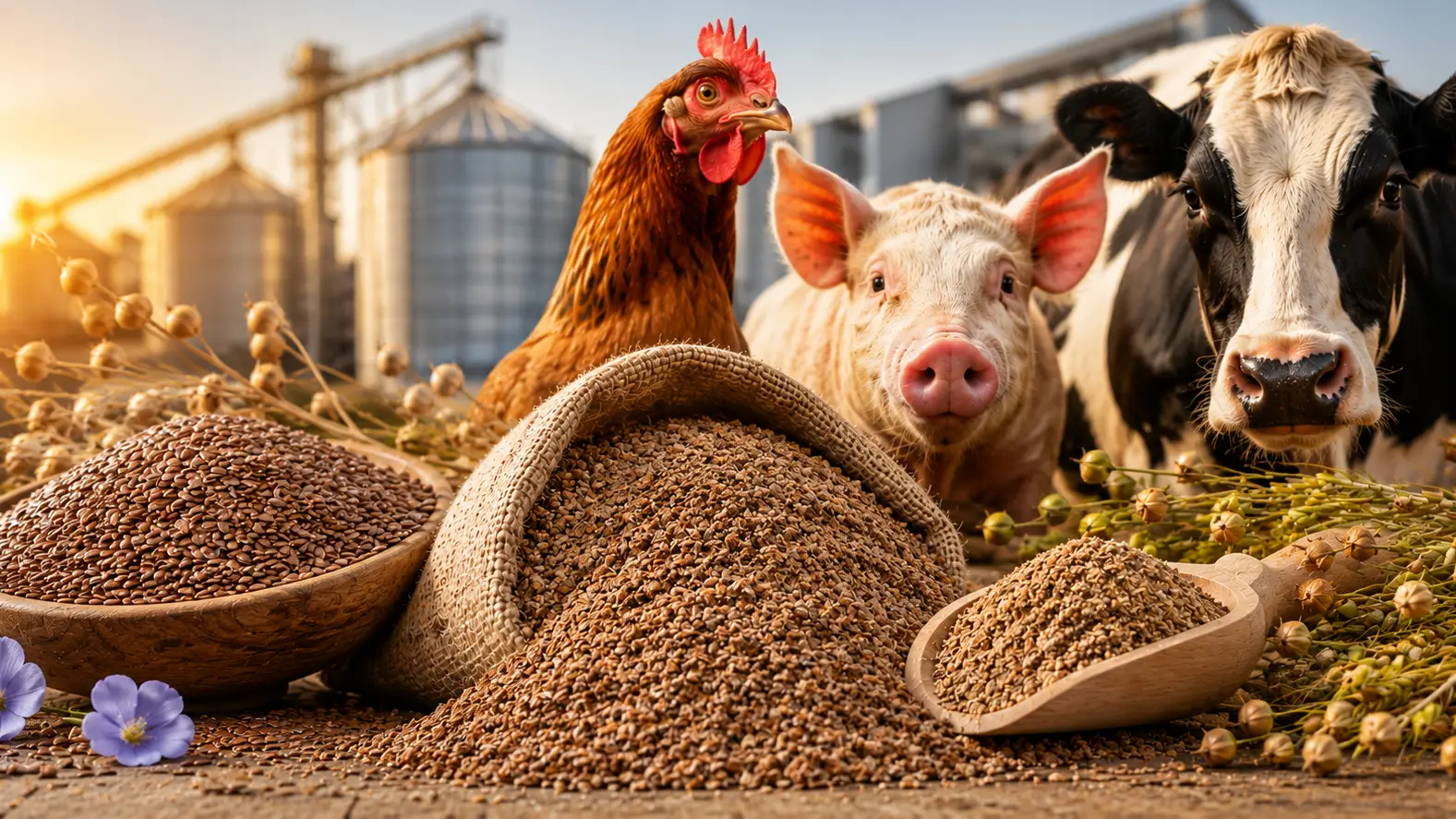
One of the primary commercial applications of linseed meal is animal nutrition. Its protein content and nutritional characteristics make it a valuable ingredient for feed manufacturers developing balanced diets for livestock and other agricultural applications.
Feed producers evaluate linseed meal based on nutritional profile, consistency, availability, and compatibility with existing formulations. Reliable sourcing enables manufacturers to maintain production schedules and meet customer requirements.
As demand for alternative plant-based feed ingredients continues to develop, linseed meal remains relevant for companies seeking diversified raw material options. Its role within agricultural supply chains supports continued market participation.
Beyond animal feed, linseed meal can be utilized in agricultural applications where organic and plant-derived materials are valued. Its composition allows it to support various agricultural practices requiring nutrient-rich materials.
Industrial buyers consider factors such as quality specifications, processing standards, and supply consistency when evaluating linseed meal. These factors influence purchasing decisions and long-term supplier relationships.
The expanding interest in sustainable agricultural resources creates additional commercial opportunities for suppliers capable of delivering consistent quality and dependable volumes.
Procurement teams evaluate linseed meal suppliers based on quality parameters, consistency, and documentation. Clear specifications help buyers compare suppliers and establish reliable purchasing agreements.
Quality assurance processes are important because variations in agricultural materials can affect end-use performance. Suppliers with effective quality management systems can provide greater confidence for industrial customers.
International buyers often require detailed product information, including origin, processing methods, and handling procedures. These details support compliance requirements and internal quality assessments.
Supplier reliability is a major consideration in B2B agricultural ingredient sourcing. Buyers typically look for partners with stable production capacity, export experience, and effective communication channels.
A dependable supplier relationship helps businesses manage inventory planning and reduce supply chain uncertainty. Long-term cooperation can create advantages through improved forecasting and purchasing efficiency.
Digital B2B marketplaces provide opportunities for buyers to compare suppliers, evaluate capabilities, and establish international trade relationships more efficiently.
The global shift toward plant-based resources has increased attention toward agricultural ingredients such as linseed meal. Industries are exploring alternatives that support sustainability goals while maintaining functional performance.
Market demand is influenced by trends in animal nutrition, agricultural development, and international commodity trade. Buyers increasingly seek suppliers that can support both current requirements and future growth.
Suppliers capable of maintaining consistent quality and competitive pricing are positioned to participate in expanding global markets. Market knowledge and supply chain efficiency remain important competitive advantages.
Different regions demonstrate varying levels of demand based on agricultural activity, livestock production, and industrial requirements. Understanding regional market conditions helps suppliers and buyers identify suitable opportunities.
Trade relationships between producing and consuming regions influence availability, pricing, and logistics strategies. Businesses involved in international sourcing must evaluate regional supply factors before establishing procurement plans.
A comprehensive market approach allows companies to identify reliable supply channels and develop stronger commercial partnerships.
Successful sourcing begins with supplier evaluation. Buyers should assess production capacity, product quality, export experience, and supply chain capabilities before selecting a partner.
A supplier’s ability to provide consistent shipments is essential for industrial operations. Companies should consider both immediate purchasing needs and long-term supply requirements.
Working with established trading platforms and verified suppliers can improve access to global sourcing opportunities and simplify supplier discovery.
Long-term procurement planning helps companies manage market fluctuations and supply risks. Developing relationships with reliable suppliers creates greater stability in purchasing operations.
Contract planning, demand forecasting, and supplier communication contribute to stronger supply chain performance. These practices allow businesses to respond more effectively to market changes.
For global buyers, strategic sourcing of linseed meal involves balancing price, quality, availability, and supplier reliability.
Digital platforms are changing how agricultural ingredients are bought and sold internationally. Online marketplaces improve transparency, supplier access, and communication between buyers and sellers.
B2B trade platforms allow companies to explore new supplier networks while improving procurement efficiency. These developments support more connected and responsive supply chains.
As digital adoption increases, suppliers with strong online visibility and reliable commercial information may gain greater access to international buyers.
Sustainability considerations are becoming increasingly important in agricultural sourcing decisions. Companies are looking for supply partners that support responsible production practices and efficient resource management.
Linseed meal suppliers that emphasize transparency, quality control, and responsible sourcing can strengthen their position in global markets.
The future of linseed meal trade will depend on supply chain resilience, market adaptability, and the ability of businesses to build reliable international partnerships.
Food and Agriculture Organization of the United Nations
We're committed to your privacy. Tradeasia uses the information you provide to us to contact you about our relevant content, products, and services. For more information, check out our privacy policy.


 English
 Indonesian
 简体字
简体字
 العربية
 Español
 Français
 Português
 日本語
日本語
 한국어
한국어
 Tiếng Việt