Explore our network of country and industry based websites to access localized information, product offerings, and business services across our group.
Log in to start sending quotation requests for any product.
Don't have an account? Sign Up Here
Home Sunflower Meal Procurement Guide: Market Trends and B2B Supply Opportunities
Trade Insights | Supply Chain | 03 July 2026
Understanding Sunflower Meal and Its Commercial Role
Major Industrial Applications of Sunflower Meal
Global Market Trends Driving Demand
Buyer Intent and Procurement Considerations
Supply Chain and Sourcing Strategies
Future Opportunities in the Sunflower Meal Market
Sources
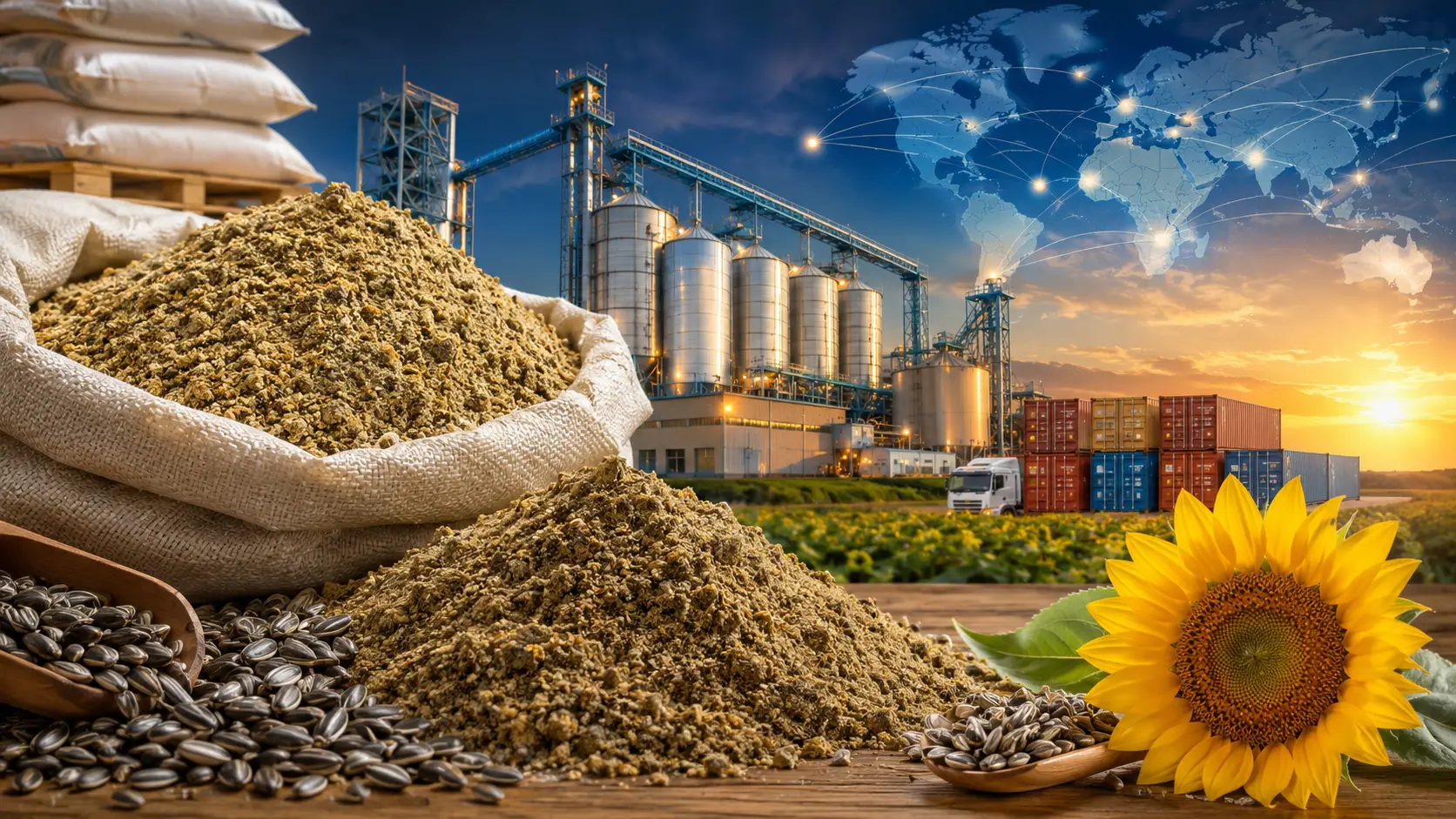
Sunflower meal is a by-product generated during the extraction of oil from sunflower seeds. It is widely used as a protein-rich ingredient in animal feed formulations due to its nutritional value and cost competitiveness in comparison with certain alternative feed materials.
The commercial importance of sunflower meal has expanded as feed producers seek diversified protein sources amid changing agricultural conditions and global commodity price fluctuations. Increased pressure on feed efficiency and livestock productivity has also supported market demand.
Sunflower meal generally contains protein, dietary fiber, amino acids, and minerals suitable for feed applications. Depending on processing methods and dehulling procedures, protein concentration can vary significantly across product grades.
According to technical information published by the Food and Agriculture Organization (FAO), oilseed meals continue to play an important role in meeting protein requirements across global livestock industries.
Sunflower meal has become a significant ingredient across several agricultural and feed sectors because of its flexibility in feed formulations. Manufacturers frequently incorporate it into diets for poultry, cattle, swine, and aquaculture production systems.
Growing industrial livestock operations continue to increase demand for feed ingredients that support nutritional consistency while maintaining cost efficiency. Protein-rich alternatives are receiving increased commercial attention.
Poultry producers often use sunflower meal as a complementary protein source within balanced feed systems. Ruminant feed manufacturers also value its fiber characteristics and nutritional contribution to cattle diets.
According to technical research published by the United States Department of Agriculture (USDA), oilseed meal utilization remains closely associated with expanding livestock production and feed optimization strategies worldwide.
Global demand for sunflower meal has been influenced by changes in crop production, vegetable oil consumption, and feed ingredient economics. Supply conditions in key sunflower-producing regions can substantially affect pricing and trade flows.
International markets increasingly monitor geopolitical developments and agricultural production volumes because disruptions may affect availability and procurement planning.
Market analysis from agricultural commodity institutions indicates that buyers are increasingly diversifying feed ingredient portfolios to reduce supply risks and manage purchasing costs.
Based on market information from the International Grains Council (IGC), oilseed meal consumption patterns continue evolving due to changing feed requirements and agricultural trade developments.
Sunflower meal buyers generally include feed manufacturers, agricultural processors, distributors, livestock producers, and procurement organizations seeking reliable protein ingredient supply.
Procurement teams evaluate products not only based on price but also on quality consistency, logistics reliability, nutritional specifications, and supplier capability.
Protein content, moisture level, fiber composition, origin, packaging options, and shipment availability often influence purchasing decisions. Buyers may also assess supplier responsiveness and documentation standards.
Supplier comparison occurs because procurement teams seek stable supply relationships capable of supporting long-term production planning. Product pages on B2B marketplaces help simplify sourcing decisions through specification visibility and supplier accessibility.
The sunflower meal supply chain begins with sunflower cultivation and oil extraction activities before moving through processing facilities, distributors, and trading channels.
Global sourcing strategies have become increasingly important as buyers attempt to reduce procurement risks and maintain uninterrupted feed production schedules.
Many procurement departments use diversified sourcing models to reduce dependence on a single geographical supply source. This approach can improve resilience during market disruptions or seasonal production fluctuations.
According to agricultural supply chain research from the World Bank, resilient sourcing networks and supplier diversification strategies contribute significantly to operational continuity.
Increasing livestock production and rising demand for protein-rich feed ingredients continue supporting long-term opportunities for sunflower meal suppliers and distributors.
Sustainability initiatives within agricultural industries are also influencing ingredient selection, creating interest in efficient utilization of oilseed processing by-products.
Future expansion may be supported by technological improvements in feed formulation and processing efficiency. Enhanced nutritional optimization methods could further increase commercial value.
Market analysis published by agricultural industry organizations suggests continued opportunities for global manufacturers, traders, and procurement teams involved in feed ingredient supply chains.
Food and Agriculture Organization (FAO)
United States Department of Agriculture (USDA)
International Grains Council (IGC)
We're committed to your privacy. Tradeasia uses the information you provide to us to contact you about our relevant content, products, and services. For more information, check out our privacy policy.


 English
 Indonesian
 简体字
简体字
 العربية
 Español
 Français
 Português
 日本語
日本語
 한국어
한국어
 Tiếng Việt



















